
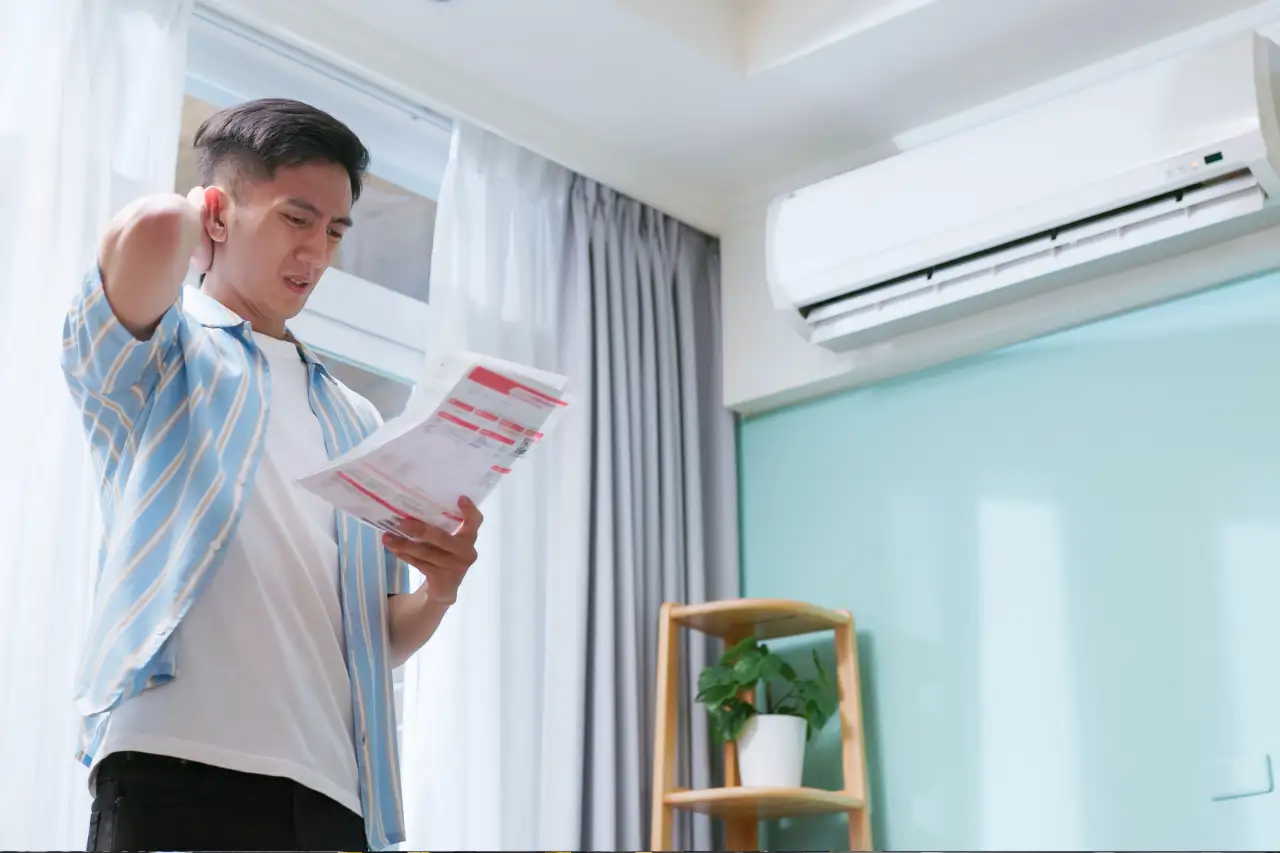
High heating bills can be frustrating, especially when your home still does not feel consistently warm. In many cases, rising heating costs are connected to furnace inefficiency, restricted airflow, duct problems, thermostat settings, or an aging heating system. ENERGY STAR notes that heating and cooling account for a significant portion of household energy use, making HVAC efficiency an important factor in monthly utility costs.
For Orange County homeowners, understanding the relationship between furnace performance and energy consumption can make it easier to recognize problems before they become expensive repairs.
A Dirty Air Filter Can Make Your Furnace Work Harder
One of the simplest causes of furnace inefficiency is a dirty or clogged air filter. When the filter becomes heavily loaded with dust and particles, airflow can become restricted. The furnace may then need to operate longer to provide the desired temperature.
ENERGY STAR recommends checking furnace filters regularly and replacing them according to the manufacturer’s recommendations. A dirty filter can increase energy use while also contributing to equipment damage and premature failure.
Homeowners should make checking the filter part of their regular HVAC maintenance routine, particularly during periods of heavier heating use.
Leaky or Damaged Ductwork Can Waste Heated Air
Your furnace may be operating correctly while your home still experiences high heating costs because heated air is being lost through the duct system. Leaks, disconnected sections, poorly sealed connections, and damaged flexible ducts can prevent conditioned air from reaching the rooms where it is needed.
ENERGY STAR explains that poorly performing ducts can contribute to higher utility bills and rooms that are difficult to heat or cool. Sealing and insulating accessible ductwork can improve system efficiency and comfort.
If some rooms remain cold while others become comfortable, ductwork deserves attention alongside the furnace itself.
An Aging Furnace May Consume More Energy
Older heating equipment can become less efficient over time, particularly when components are worn, dirty, or require frequent repairs. ENERGY STAR identifies an aging furnace, increasing energy bills, and frequent repairs as signs that homeowners may need to evaluate whether their heating equipment is still performing efficiently.
This does not automatically mean replacement is necessary. A professional inspection can help determine whether maintenance or repair can restore acceptable performance or whether replacement should be considered.
Thermostat Problems Can Increase Heating Costs
Thermostat settings have a direct effect on how long your furnace operates. Incorrect programming, inaccurate temperature readings, or a thermostat located in an unsuitable area can cause the system to run more than necessary.
A programmable or smart thermostat can help homeowners adjust temperatures based on occupancy and sleeping schedules. However, the thermostat should also be correctly installed and compatible with the heating system.
Poor Furnace Maintenance Can Lead to Efficiency Problems
Regular maintenance helps identify developing problems before they become major failures. During a professional heating inspection, a technician can check important components such as electrical connections, moving parts, controls, airflow, burners, heat exchangers, and other furnace components.
Neglecting maintenance can allow dirt, wear, airflow restrictions, and mechanical problems to continue unnoticed. Over time, these issues may contribute to higher operating costs and more frequent repairs.
Blocked Airflow Can Cause Furnace Problems
A furnace needs adequate airflow to operate properly. Restricted filters, blocked vents, damaged ducts, or other airflow problems can interfere with heating performance.
You may notice symptoms such as:
- Rooms that remain colder than others
- Weak airflow from vents
- Longer furnace operating cycles
- Frequent cycling
- Increasing heating bills
- Uneven indoor temperatures
Airflow problems should not simply be ignored because continued operation under poor conditions can place additional strain on HVAC components.
Poor Insulation and Air Leaks Can Increase Heating Demand
Not every heating problem originates inside the furnace. Poor insulation, gaps around doors and windows, and other areas of air leakage can allow heated indoor air to escape.
When a home loses heat quickly, the furnace has to operate more frequently to maintain the thermostat setting. Improving the building envelope can therefore be an important part of reducing heating demand.
This is especially worth considering when a furnace appears to operate normally but the home still struggles to maintain comfortable temperatures.
Frequent Cycling May Indicate an Underlying Problem
A furnace that repeatedly turns on and off over short periods may be experiencing an airflow issue, thermostat problem, sizing issue, or another mechanical condition.
Frequent cycling can increase wear because the equipment repeatedly starts and stops rather than completing normal heating cycles. If this behavior occurs regularly, homeowners should have the system professionally evaluated rather than simply adjusting the thermostat.
Strange Noises Should Not Be Ignored
Unusual sounds can provide clues that furnace components need attention. Rattling, banging, squealing, grinding, or persistent humming may indicate loose parts, motor problems, airflow issues, or other mechanical concerns.
A noisy furnace does not necessarily mean a major repair is required, but persistent or worsening sounds are worth investigating. Early attention can sometimes prevent a smaller mechanical issue from developing into a more expensive failure.
When Professional Furnace Repair May Be Necessary
If your furnace is producing insufficient heat, cycling unusually, making persistent noises, or causing unexpectedly high energy bills, professional evaluation can help identify the underlying cause.
When searching for furnace repair Orange County, homeowners should look for qualified HVAC professionals who can diagnose the complete system rather than focusing only on one symptom. A proper evaluation may include checking airflow, filters, thermostat operation, ductwork, electrical components, burners, and other furnace components.
Gas-fired furnaces also require particular care because problems involving burners, combustion, heat exchangers, or venting can create safety concerns. ENERGY STAR recommends professional inspection of these heating components as part of appropriate maintenance.
Simple Steps to Help Control Heating Costs
Homeowners can take several practical steps to improve furnace performance:
- Check and replace dirty filters as recommended.
- Keep supply and return vents unobstructed.
- Check for obvious signs of damaged or disconnected ductwork.
- Use reasonable thermostat schedules.
- Arrange regular professional furnace maintenance.
- Investigate unusual noises or repeated cycling.
- Address obvious drafts and insulation problems.
- Have an aging or frequently repaired furnace evaluated for efficiency.
These measures can help reduce unnecessary furnace workload while improving indoor comfort.
Final Thoughts
High heating bills and furnace problems often have connected causes. A dirty filter, leaky ductwork, poor airflow, thermostat issues, inadequate insulation, neglected maintenance, or aging equipment can all contribute to inefficient heating.
Instead of assuming that a higher utility bill simply means the furnace is using more energy, homeowners should consider the entire heating system. Identifying the underlying problem early can improve comfort, reduce unnecessary operating costs, and potentially prevent more serious furnace damage.