

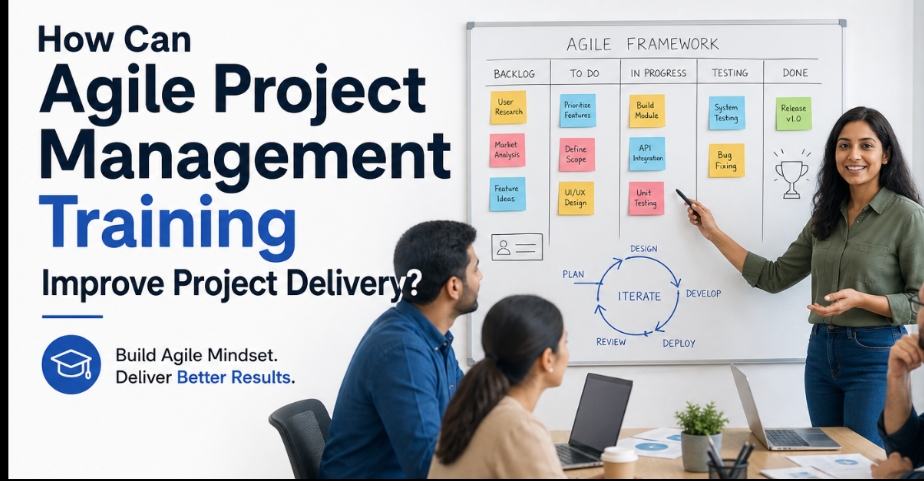
Successful project delivery requires effective planning, teamwork, and the ability to respond to changing requirements. Poor communication, unexpected risks, and rigid plans can lead to delays and unnecessary costs. Agile provides a flexible approach that helps teams complete work in smaller stages, review progress, and respond to feedback. Agile Project Management Training helps professionals develop practical skills to manage these challenges. By improving collaboration, prioritisation, risk management, and quality control, teams can deliver valuable results more efficiently while keeping projects aligned with customer expectations and business objectives.
How Does Agile Project Management Training Improve Planning and Team Collaboration?
Agile planning divides large projects into smaller, manageable tasks. Instead of relying on a fixed plan throughout the project, teams review progress and adjust priorities when necessary. This approach helps project managers identify problems early and allocate resources effectively. Through an AgilePM Course, professionals can learn how to set realistic goals, organise tasks, and monitor progress. Regular planning sessions also help teams maintain focus while responding to new information and changing business needs.
Improving Team Communication
Poor communication can cause misunderstandings, duplicated work, and missed deadlines. Agile encourages regular discussions between team members, project managers, and stakeholders. Daily meetings and progress reviews help everyone understand responsibilities, priorities, and potential obstacles. These conversations also allow teams to resolve issues before they become serious problems. Agile Project Management Training helps professionals develop collaboration skills and establish clearer communication practices, making it easier to coordinate activities and maintain progress throughout the project lifecycle.
Setting Clear Priorities
Project teams often struggle when too many tasks compete for limited time and resources. Agile helps them identify important activities and focus on work that delivers the greatest value. Breaking projects into smaller tasks makes progress easier to monitor and responsibilities easier to manage. Teams can review completed work before moving forward, identify gaps, and adjust plans. Clear priorities reduce confusion and allow everyone to concentrate on the project’s most important objectives.
How Can AgilePM Training Help Teams Adapt to Changing Project Requirements?
Customer expectations can change during project development. Agile teams regularly review completed work with stakeholders and use feedback to improve future deliverables. For example, a business developing an online booking system might discover that customers need a simpler checkout process. The team can prioritise this improvement before completing the entire system. AgilePM Training helps professionals understand how feedback can guide decisions, reduce unnecessary rework, and keep project outcomes aligned with customer needs.
Managing Changing Priorities
Not every new request deserves immediate attention. Teams need a structured way to evaluate changes according to their value, cost, urgency, and impact on deadlines. AgilePM uses MoSCoW prioritisation to classify requirements as Must Have, Should Have, Could Have, or Won’t Have this time. This technique helps teams protect essential deliverables when resources are limited. It also makes stakeholder discussions more productive by clarifying which requirements are necessary and which can wait.
Maintaining Business Alignment
Frequent changes can distract teams from their original objectives. Project managers should explain why a change is needed, how it affects existing commitments, and whether other activities must be delayed. Regular reviews help ensure that new priorities continue to support business goals. When stakeholders understand the available options and trade-offs, they can make better decisions. This balance between flexibility and control allows teams to respond to changing requirements without losing direction or accountability.
How Does an AgilePM Course Help Reduce Project Risks and Delivery Delays?
Project risks include technical problems, resource shortages, unclear requirements, and delayed approvals. Agile teams review work regularly, making it easier to identify potential issues before they affect the entire project. For example, testing an integration during an early development stage can reveal compatibility problems while there is still time to find alternatives. An AgilePM Course helps professionals understand how iterative delivery, timeboxing, and regular reviews can support early risk identification and informed decisions.
Monitoring Progress Effectively
Teams need clear information to understand whether work is progressing as expected. Task boards help them track activities that are planned, underway, awaiting review, or completed. This visibility makes bottlenecks easier to identify and allows managers to address delays quickly. Teams can also monitor cycle time, completed work, and milestone progress. These measurements provide useful insights when considered alongside quality and customer outcomes. Monitoring should support better decisions rather than simply encourage teams to complete more tasks.
Improving Risk Management
Risk management should continue throughout the project instead of ending after initial planning. Regular reviews help teams reassess threats, check existing responses, and identify new challenges. Retrospectives allow team members to discuss delays and suggest practical improvements. For example, a team experiencing repeated approval problems could introduce clearer deadlines and involve decision-makers earlier. These adjustments help prevent recurring issues and create a more controlled delivery process without removing the flexibility needed to manage change.
How Can Agile Project Management Training Improve Project Quality and Customer Satisfaction?
Project quality should be checked throughout implementation rather than only at the end. Agile teams establish acceptance criteria, review completed tasks, and test deliverables regularly. Software teams might use automated testing and peer reviews, while other teams may check documents, reports, or campaign materials before approval. These practices help identify defects early and reduce expensive corrections. Clear quality standards also ensure that team members understand what must be achieved before work can be considered complete.
Involving Customers in Reviews
Regular stakeholder reviews help teams confirm that deliverables meet customer expectations. Instead of waiting until the final stage, project managers can gather feedback after completing smaller pieces of work. This approach is especially useful when requirements are uncertain or likely to change. However, reviews should have clear objectives, suitable participants, and agreed deadlines. When feedback is specific and timely, teams can make improvements without creating unnecessary meetings or disrupting the delivery schedule.
Encouraging Continuous Improvement
Agile teams learn from completed work and use those lessons to improve future performance. Retrospectives help participants identify what worked well, what caused difficulties, and which changes could produce better results. AgilePM Training can help professionals understand these practices and apply them consistently. Teams can also track customer satisfaction, defect rates, and delivery predictability to measure progress. Reviewing these indicators together provides a clearer picture of whether changes are improving project performance and business value.
Developing Practical Agile Skills With Tecknologia
Understanding Agile principles is useful, but applying them confidently requires structured learning and practical development. Professionals exploring Agile Project Management Training can consider Tecknologia, which offers project management training options to support professional development. Choosing a suitable course allows learners to build their understanding of planning, stakeholder engagement, prioritisation, and delivery control. Before enrolling, learners should check the syllabus, training format, examination arrangements, and certification pathway to ensure the programme matches their experience and career goals.
Conclusion:
Agile improves project delivery through better planning, stronger communication, flexible decision-making, and continuous quality checks. These practices help teams identify risks early, respond to changing requirements, and maintain focus on valuable outcomes. An AgilePM Course can provide a structured learning pathway for understanding agile principles and practices. With suitable training, supportive leadership, and regular performance reviews, organisations can improve collaboration, reduce avoidable delays, and deliver results that better meet customer expectations. Professionals can explore Tecknologia’s training options to identify learning opportunities that align with their project management responsibilities and development goals.
