

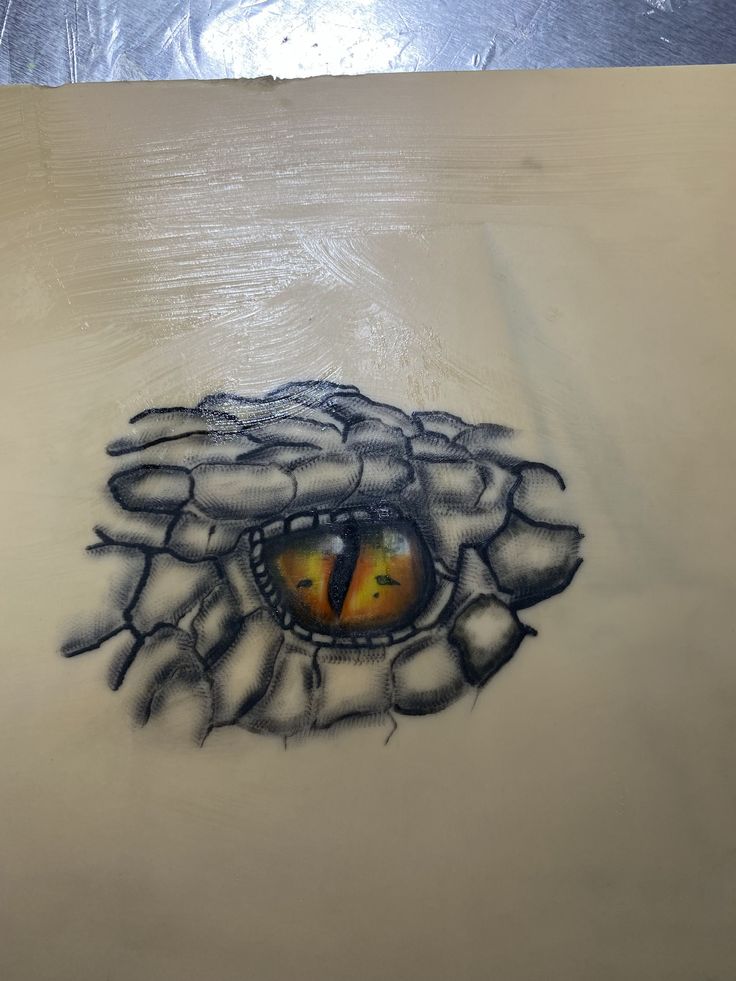
Three-dimensional tattooing relies on the physics of light and shadow to override the brain’s awareness that skin is a flat surface. Because 3d areola tattoo san francisco ink sits inside the dermis on a single plane, depth cannot be built physically; instead, artists engineer optical illusions using tonal contrast, directional lighting, and edge control to convince the eye that an image is hovering above the skin, carved into it, or emerging from beneath.
1. Establishing a Single Light Source
Every realistic 3D tattoo begins with a strict, imaginary light source—usually positioned above and slightly to one side of the design to mirror natural overhead lighting.
-
Consistent Shadow Vectors: Once the light angle is chosen, every single element in the tattoo must obey it. Highlights sit on the surfaces facing the light, core shadows wrap around the opposite side, and cast shadows fall uniformly away from the light source.
-
Avoiding Visual Contradictions: If two water droplets or mechanical gears in the same piece cast shadows in different directions, the human brain immediately detects the error and the 3D illusion collapses back into a flat drawing.
2. The Five Zones of Light and Shadow
To turn a flat shape into a three-dimensional form—such as a sphere, cylinder, or sculpted relief—tattoo artists divide every surface into five tonal zones:
-
Center Highlight: The brightest area where light strikes the object directly, often left as bare skin or accented with opaque white ink.
-
Mid-Tone (Halftone): The true base tone of the subject where light begins to fall away across the surface.
-
Core Shadow: The darkest band directly on the object itself, sitting along the ridge where direct light can no longer reach.
-
Reflected Light: A subtle, dim glow along the shadowed edge of the object caused by ambient light bouncing off the surrounding skin back into the dark zone. Including reflected light separates the object from its background and gives it rounded volume.
-
Cast Shadow: The shadow the object projects onto the skin or neighboring surfaces.
3. Drop Shadows vs. Inner Shadows
Where an object appears to sit relative to the skin depends entirely on how the artist shapes and places its cast shadow:
-
Detached Drop Shadows (The Floating Effect): To make a butterfly, spider, or geometric shape appear suspended in mid-air, artists place a soft-edged, translucent greywash shadow slightly offset from the subject. The un-tattooed gap of bare skin between the subject and its shadow creates the perception of empty air. The wider and softer the shadow, the higher the object appears to float.
-
Tight Inner Shadows (The Recessed or Carved Effect): To create the illusion of torn skin, a hollowed-out grid, or a biomechanical cavity, artists reverse the shadow placement. When overhead light hits an opening in the skin, the rim closest to the light blocks the rays and casts a sharp, dense black shadow directly onto the interior wall of the cavity, while the opposite rim catches a bright highlight. This high-contrast edge signals to the brain that the surface drops inward.
4. Chiaroscuro, Greywash, and Edge Control
Realistic lighting requires precise control over both tonal range and the sharpness of transitions:
-
Black Anchoring: Borrowing from the Renaissance technique of chiaroscuro (strong contrast between light and dark), artists pack solid, undiluted black ink into the deepest shadow zones. Without deep black to push background elements visually backward, mid-tones look flat and highlights fail to pop forward.
-
Greywash Gradients: Rather than using hard black outlines—which flatten an image—artists blend diluted black inks (greywash) using smooth circular motions or whip shading. Gradual tonal transitions mimic how light wraps smoothly around curved surfaces.
-
Hard vs. Soft Edges: Sharp, crisp edges draw the viewer’s eye forward and indicate overlapping planes or razor-sharp cuts, while soft, feathered edges push elements into the background and convey gentle curvature.
5. Specular Highlights and Skin Breaks
At the final stage of the tattoo, artists apply tiny dots or hairline strokes of pure white ink—known as specular highlights—to simulate wet surfaces, polished metal, glass, or sharp edges. Because white ink can fade or yellow slightly as skin heals over time, skilled artists rely primarily on un-tattooed skin breaks for broader light areas and reserve pure white strictly for small, high-contrast reflections that sell the illusion of physical texture.